
How to Prepare for Your Hot Tub Delivery
Getting your hot tub delivered is the easy part. Getting your yard, your pad, and your electrical ready before the truck arrives is what determines whether delivery day takes an hour or turns into a reschedule. The short version: you need a level, load-bearing surface in the spot you have chosen, a clear path wide enough to move the spa from the street to that spot, and a licensed electrician lined up to run power to the tub.
If you are buying this fall, timing matters more than usual in Michigan. Concrete needs mild weather to pour and cure, and the ground gets harder to work with every week after October. Here is what to handle, in the order it needs to happen.
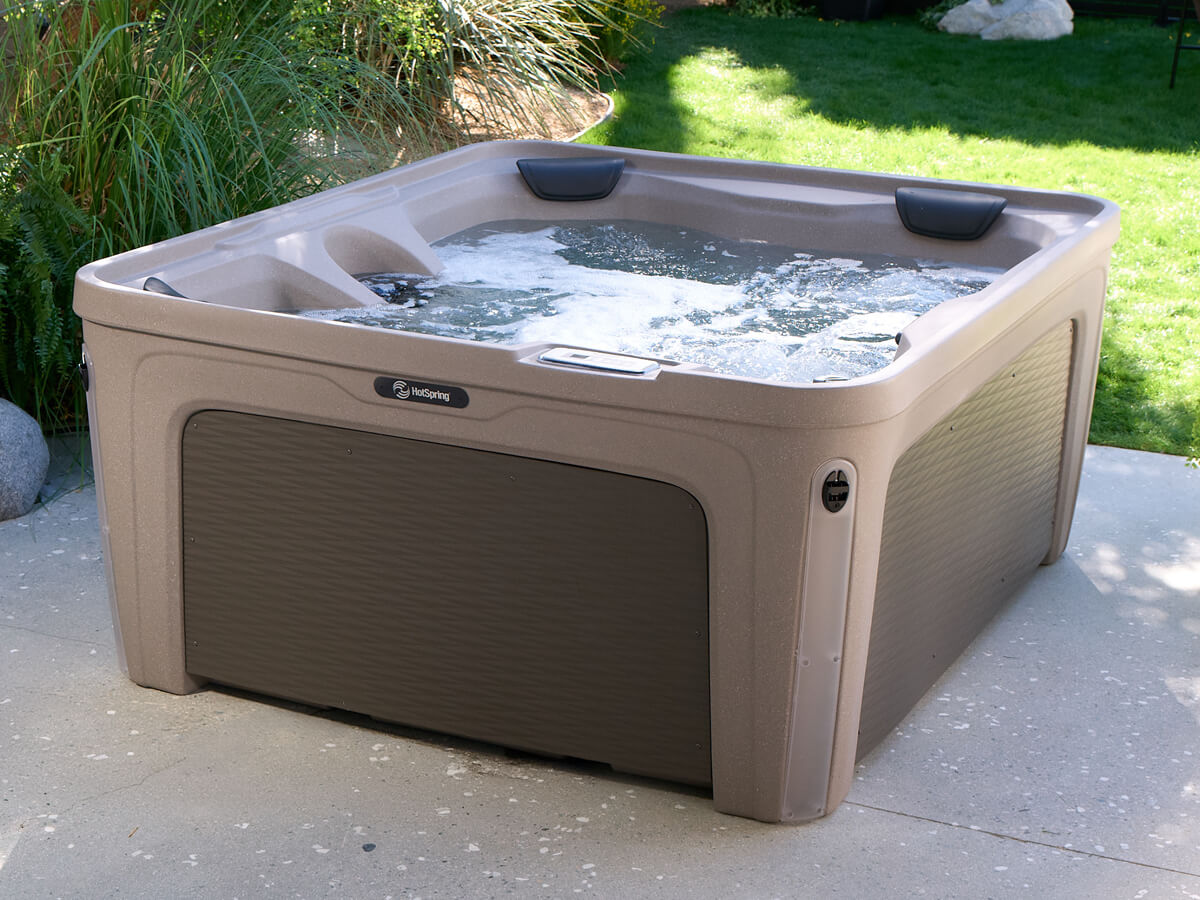
1. Choose the spot, then prepare the surface
A filled hot tub with people in it can weigh several thousand pounds, so the surface underneath has to be level and rated to carry that load. The four options most homeowners use:
- Concrete pad. The most common choice, and the most forgiving over time. Four inches is typical for a residential spa pad. Pour it while overnight temperatures are still reliably above freezing.
- Paver or crushed stone base. A compacted gravel base topped with pavers works well and is easier to install late in the season than concrete. The critical part is compaction, not the pavers themselves.
- Reinforced deck. Possible, but never assume an existing deck can handle it. Have a contractor confirm the framing and footings can carry the filled weight of the model you chose.
- Prefabricated spa pad. Interlocking panels over a compacted, level base. Fast to install and a reasonable option when you are ordering close to winter.
Think about the rest of the year while you are picking the spot. You want a short walk from the door you will actually use in February, drainage that carries water away from the house and away from the equipment bay, and enough clearance on at least one side for a technician to open the cabinet and reach the pump and heater. Leaving that access room is one of those details people regret skipping the first time they need service.
2. Measure the delivery path before delivery day
Most delivery problems are access problems, and almost all of them are avoidable with a tape measure. Walk the route the spa will travel and check:
- The narrowest point along the path, including gates, fence posts, and the gap between the house and a detached garage. Measure the actual opening, not the gate frame.
- Overhead obstructions: low branches, eaves, gutters, and utility lines.
- Tight corners and steps, especially a turn between a side yard and a back yard.
- Slope and soft ground. A steep or muddy grade changes the equipment needed to move the spa.
- Anything that has to come out temporarily, like a gate panel, a section of fence, or an air conditioning condenser cover.
If any of that is uncertain, book a free in-home consultation before you finalize the model. We would rather look at your yard first than discover a 34-inch gate on delivery morning. It is also the right time to talk through model dimensions, since a compact spa and a large lounge model can call for very different approaches to the same yard.
3. Line up the electrical work
This is the step that most often holds up a first soak, because it depends on a third party’s schedule. Hot tubs generally fall into two camps. Some are plug and play, running on a standard 110v household outlet on a dedicated circuit. Most full-size spas are hard-wired for 240v, which requires a dedicated circuit, an appropriately sized breaker, and a GFCI disconnect box mounted within sight of the spa but a code-required distance away from the water.
What you need to do:
- Confirm the electrical requirements for the specific model you ordered before you call anyone. Requirements vary by model, not just by brand.
- Hire a licensed electrician. This is not a DIY job, and your municipality will very likely require a permit and inspection.
- Have the electrician quote the run from your panel to the spa location. Distance and whether the run is buried or surface-mounted are the two biggest cost drivers.
- Schedule the electrician for after delivery, not before. The spa needs to be in place and set before final connection.
Our pre-delivery instructions cover the specifics your delivery crew needs, and it is worth reading them start to finish once your order is placed rather than skimming them the night before.
4. Why fall delivery deserves a head start in Michigan
Nothing about a Michigan winter stops you from using a hot tub. Cold weather is when most owners use theirs the most. What winter does affect is the prep work. Concrete needs above-freezing temperatures to pour and cure properly. Excavating or compacting a gravel base is straightforward in September and genuinely difficult in December. Electricians book out further as the season turns.
If you want to be soaking before the first hard freeze, work backward: pad prep, then delivery, then electrical, then fill and heat. Building in a couple of weeks of margin between those steps is the difference between a relaxed process and a rushed one.
5. Delivery day and the first fill
On the day itself, clear the path and keep pets and kids inside while the crew works. After the spa is set and connected, you will fill it with a garden hose, start the heater, and balance the water. A full-size spa typically takes several hours to reach temperature from a cold fill, so plan your first soak for the following day rather than that evening.
Before you fill, pick up the water care products you will need for the first month. You can get those at any of our showrooms or from our online store, and the Auto Ship program keeps them arriving without you having to think about it.
Common questions about hot tub delivery
Do I need a concrete pad for a hot tub?
Not necessarily. Concrete is the most common and most durable base, but a properly compacted gravel base with pavers, a reinforced deck, or a prefabricated spa pad all work. The requirement is a level, load-bearing surface that will not settle or shift under the filled weight of the spa.
How much clearance do I need to get a hot tub into my back yard?
It depends on the model, but the number to check is the narrowest point along the entire delivery path, including gates and the gap between structures. Spas are usually moved on their side, so the width of the tub matters more than its length. Measure before you order and we will match you to a model that fits the access you have.
Can I install the electrical myself?
No. A 240v spa circuit requires a licensed electrician, and most Michigan municipalities require a permit and inspection. Beyond the code issue, improper wiring is a safety hazard around water and can void your warranty coverage.
How long after delivery can I use my hot tub?
Usually the next day. Once the electrical is connected you fill the spa, start the heater, and wait for it to come up to temperature, which commonly takes several hours or overnight depending on the size of the spa and the temperature of the fill water.
Ready to plan your install?
We have helped homeowners across southeast and mid-Michigan work out access, pads, and power for a long time, and there is almost always a way to make it work. Browse the Hot Spring Spas collections to see sizes and layouts, then request pricing or stop into one of our seven Michigan showrooms in Ann Arbor, Fenton, DeWitt, Novi, Rochester Hills, and Saginaw. If you want to try before you decide, book a showroom test soak. Financing is available with approved credit. Questions about your specific yard? Call us at 810-629-6200.