
How Much Does It Cost to Run a Home Sauna?
For most households, a home sauna adds a modest amount to the monthly electric bill. An infrared sauna generally costs less to run, while a traditional sauna costs more because its heater is larger and needs time to warm the room. Your actual cost depends on the heater size, how long you preheat, how often you use it, and your electricity rate.
Here is how to estimate it for your own sauna, and how to keep the cost down through a Michigan winter.
How to estimate your sauna’s running cost
The math is simple:
Heater size in kilowatts (kW) x hours of use = kilowatt hours (kWh) used
kWh used x your electricity rate = cost
You can find your rate per kWh on your utility bill, whether you are with DTE, Consumers Energy, or another provider. Your sauna’s heater size is listed in its specifications, and our team can tell you the exact figure for any Tylö sauna you are considering.
One more thing to know: a sauna heater does not run at full power the whole time. Once the room reaches temperature, the heater cycles on and off to hold it there. So a full-power estimate is an upper limit, and your real cost is often lower.
Infrared sauna running cost
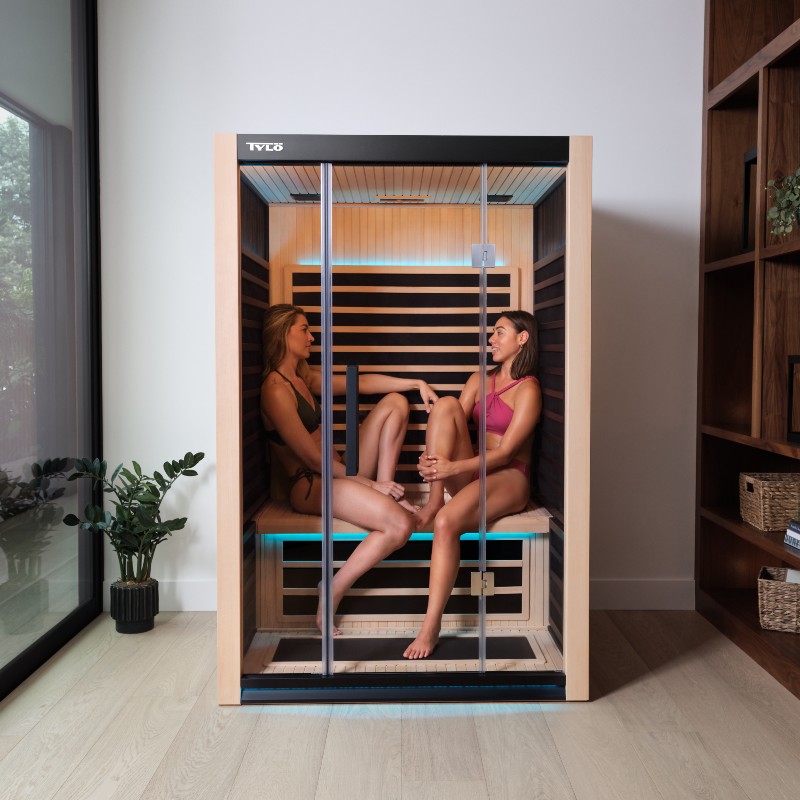
Infrared saunas use panels that warm your body directly instead of heating all the air in the room, so they draw less power and are ready faster. Shorter warm-up times and smaller heaters mean less electricity per session, which is why infrared is usually the more economical way to enjoy regular sauna sessions.
Infrared cabins are also friendly to standard home electrical setups, which keeps installation simpler. See our Tylö infrared saunas.
Traditional sauna running cost

Traditional saunas heat the air and stones in the room to a higher temperature, which takes a bigger heater and some preheat time before you step in. That means more electricity per session than infrared. The heater only runs at full power while the room is heating up, though. Once it reaches temperature, it cycles on and off, so the cost of a longer session is often lower than a full-power estimate suggests.
Traditional saunas usually need a dedicated electrical circuit for the heater. Explore our Tylö traditional saunas.
What about hybrid and outdoor saunas?

A hybrid sauna gives you both infrared and traditional heat in one cabin, so your cost depends on which mode you use for a given session. Infrared sessions cost less, traditional sessions cost more.

An outdoor sauna starts from a colder room in winter, so preheating takes longer on a January night than on a mild fall evening. Placement and wind exposure play a part too. Our post on outdoor vs. indoor saunas covers what each installation needs.
Running cost at a glance
| What affects cost | Infrared | Traditional |
|---|---|---|
| Heater size | Smaller | Larger |
| Warm-up time | Short | Longer, with preheat |
| Electricity per session | Lower | Higher |
| Electrical setup | Often a standard household setup | Usually a dedicated circuit |
| Overall running cost | Modest | Modest, but higher than infrared |
Your own numbers will vary. Plug your heater size, session length, and electricity rate into the formula above for a real estimate.
How to keep sauna running costs low
- Preheat only as long as you need. Infrared saunas warm up quickly, and traditional saunas do not need to sit hot for long before you go in.
- Keep the door closed while it heats, and step in and out quickly.
- Turn it off when you are done instead of leaving it running between sessions.
- Choose a well-insulated, well-built cabin. Quality construction holds heat better.
- For outdoor saunas, consider placement that is sheltered from wind.
Running cost vs. purchase price
Running costs are usually the smaller part of the picture. The bigger decision is which type of sauna fits your space and how you want to use it. If you are still deciding, read infrared vs. traditional sauna: how to choose, and check our sauna pricing guide for purchase pricing by collection.
Sauna running cost FAQs
Is a sauna expensive to run?
Not usually. For regular home use, a sauna adds a modest amount to your monthly electric bill. An infrared sauna generally costs less to run than a traditional sauna, depending on heater size, how often you use it, and your electricity rate.
Is an infrared sauna cheaper to run than a traditional sauna?
Generally, yes. Infrared saunas use smaller heaters and warm up faster, so they use less electricity per session than traditional saunas.
How long does a sauna take to heat up?
Infrared saunas are ready relatively quickly. Traditional saunas take longer because they heat the air and stones in the room, and outdoor saunas take longer still in cold weather.
Do I need special wiring for a home sauna?
Traditional saunas usually need a dedicated circuit for the heater. Many infrared saunas work with a standard household setup. Check the requirements for your specific model and have a licensed electrician handle any new wiring.
Try a sauna before you buy
The best way to choose is to feel the difference. Talk with our team about seeing our Tylö saunas in person, and request pricing when you are ready.